Catching rain means collecting and reusing rainwater before it runs off into streets and storm drains. Examples include rain barrels and cisterns which capture water from rooftops and store it for later use. This practice is also called rain harvesting.
Why catch rain?
Catching rain is a simple way to make better use of water, a natural resource. It helps reduce stormwater runoff, keeps pollutants out of local streams and rivers, lowers the risk of flooding during heavy rain, and eases pressure on sewer systems. Collected rainwater can then be reused for gardens and landscaping, conserving drinking water and saving money.
Systems that use barrels or cisterns differs from other stormwater management practices because they store water for later use — the water is temporarily held until it can be reused for watering plants. Rain gardens, bioswales, and native plantings manage stormwater by slowing it down and absorbing it into the soil where it is naturally filtered and recharges groundwater.
How to catch rain
Collecting rain can be as simple as connecting a container, such as a barrel or cistern, to a downspout. When it rains, water from the roof is directed into the container for storage. If the container fills, excess water flows out through an overflow outlet near the top. The container is typically elevated or connected to a pump and includes a hose bib, making it easy to use the stored water.
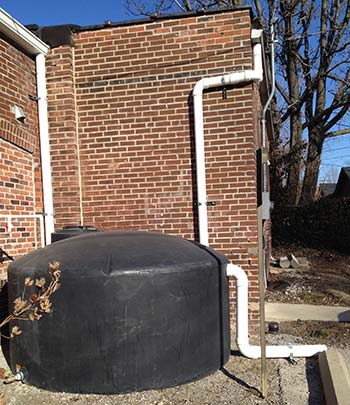
At Brightside, our rain barrel system can capture up to 165 gallons of water using three 55-gallon barrels. In addition, the on-site cistern is capable of collecting up to 1,000 gallons of rainwater from a 3,000-square-foot flat roof.
Two downspouts feed into the cistern, and an electric pump allows stored water to be used for irrigation when needed. When the cistern reaches capacity, an overflow drain directs excess water into the porous concrete parking area, where it can safely infiltrate back into the ground.
Limitations of catching rain
While rain barrels and cisterns can be effective tools for managing stormwater their storage capacity is limited and they can fill quickly during heavy rain events. Regular maintenance is also required, including cleaning screens, checking connections, and draining or winterizing systems in colder months. In some areas, local codes or regulations may restrict how rainwater can be collected or used, so it is important to check local guidelines before installing a system.
Rain barrels and cisterns are not the right solution for everyone, and other rainwater management approaches can be just as effective. Creating a rain garden or replacing areas of lawn with planting beds of native perennials, grasses, shrubs, and trees are excellent alternatives. These methods can be better options for many landscapes, as they help absorb and filter stormwater naturally, often require less maintenance, and add more beauty and ecological benefit than rainwater collection systems.
Create Your Own Sustainable Landscape
Explore the pages below to discover additional ways to manage stormwater.
Resources
See what the Metropolitan St. Louis Sewer District has to say about rain barrels.
St. Louis City’s Information and Resources for Installing Rain Barrels
The Missouri Botanical Garden’s Guide to Rainwater Harvesting
EPA shares Tools, Strategies and Lessons Learned from EPA Green Infrastructure Technical Assistance Projects.