Permeable pavement is any hard surface that allows rainwater to pass through its surface and soak into the ground below, reducing runoff and flooding while helping filter pollutants and recharge groundwater. It also lessens erosion, eases pressure on stormwater systems, and can reduce heat buildup compared to conventional pavement.
Over 8,000 square feet of impervious surface was removed from The Brightside Demonstration Garden and replaced with four types of permeable pavement. When planning your next large-scale or home landscaping project, consider these permeable options as a simple way to manage stormwater and support a healthy ecosystem.
Filterpave
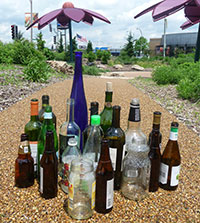
The Brightside Demonstration Garden was the first site in the St. Louis region to feature FilterPave porous pavement. Making up the garden pathway, FilterPave is made from a blend of 20% post-consumer recycled glass and 80% locally sourced crushed Osage River rock. The crushed glass and rock are bound together with a flexible binder to create a porous yet durable surface that lets rainwater through to the soil below.
Each square foot of FilterPave contains approximately 18 recycled glass bottles, which are tumbled before installation to reduce sharp edges. In total, more than 16,500 recycled bottles are incorporated into the garden’s pathways. Using recycled materials helps keep waste out of landfills while reducing the need to extract new raw materials from the earth.
Porous Asphalt & Concrete
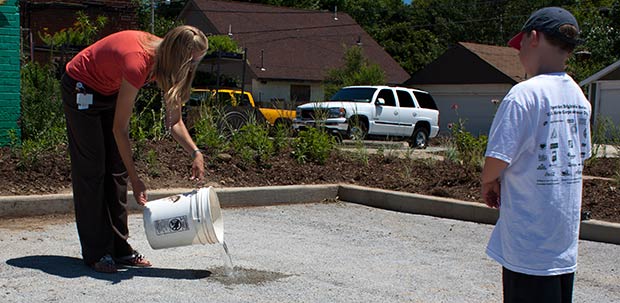
Behind the Brightside building, the parking lot features a side-by-side demonstration of porous asphalt and concrete. These surfaces resemble their conventional counterparts but allow water to drain through large void spaces that make up roughly 15–25% of the material. Porous concrete is made from cement, water, and coarse, washed aggregate, while porous asphalt uses graded stone bound with a bituminous binder. Both systems are installed over a gravel base that provides temporary water storage and allows stormwater to infiltrate into the soil below.
Permeable Pavers
Permeable pavers are featured in front of our office — installed above the Silva Cell system — and along the edge of the porous concrete parking lot. This system is composed of individual stone or concrete pavers set with small, gravel-filled gaps that allow water to soak into the soil beneath. Because they use familiar materials and installation methods, permeable pavers are often the most approachable and cost-effective permeable paving option, making them especially practical for homeowners and small-scale projects.
See permeable pavement at the Demo GardenFunding for all permeable pavement in The Brightside Demonstration Garden was provided through a grant from the U.S. Environmental Protection Agency Region 7, through the Missouri Department of Natural Resources, under Section 319 of The Clean Water Act.
Create Your Own Sustainable Landscape
Explore the pages below to discover additional ways to manage stormwater.
Resources
Learn more about Filterpave Porous Pavement
See what MSD has to say about permeable pavement as a best management practice to manage storm water.
Lots of helpful information about permeable surfaces and storm water management plus a list of resources at the bottom.
East-West Gateway Council of Governments explores St. Louis rainscaping projects.
EPA shares Tools, Strategies and Lessons Learned from EPA Green Infrastructure Technical Assistance Projects.
See what other communities are doing with permeable pavement: